
The "Beautiful Game" is facing a silent attrition. Despite football's global popularity, grassroots organizations are witnessing a sharp decline in participation as players reach their early teens. According to long-term athletic development research, approximately 70% of youth athletes stop playing organized sports by age 13. The exit is rarely about a lack of talent; it is about a lack of engagement and perceived progress.
At Gengee, our journey as a UEFA Reimagine Football Finalist allowed us to dive deep into this crisis. We’ve identified that the traditional "analogue" model of youth training often clashes with the psychological needs of the "digital native" generation. Here is how we are leveraging technology to keep the next generation on the pitch.
1. Reclaiming Mastery Through the "Dopamine Loop"
The Pain Point: The "Grind" vs. The "Game"
Most youth players quit because the sport stops being "fun." Traditional drills are often repetitive and lack the immediate feedback loop that video games provide. When a child practices alone, they have no objective way to measure improvement, making the "grind" of training feel unrewarding to a 10-year-old.
The Solution: Digital Gamification
By integrating Connected Ball Technology—the same logic now used in elite match balls—we transform solitary drills into an interactive experience. Our INSAIT JOY Smart Football doesn’t just record data; it provides a "feedback loop."
When a player sees their "Fluency" score or "Ratings" on the INSAIT JOY App, the training session transforms from a chore into a "level-up" challenge. This mimics the dopamine triggers of gaming but applies them to physical mastery, keeping the "Fun Factor" alive.

Turning practice into play: INSAIT JOY's instant feedback loop helps players visualize their progress in real-time.
2. Visibility for the "Unsung Heroes"
The Pain Point: Subjective Bias and "Goal-Centric" Burnout
In many grassroots settings, the spotlight only shines on the strikers. Defenders and midfielders who don't score goals frequently feel undervalued by coaches and parents, leading to a loss of self-esteem and eventual withdrawal.
The Solution: Multi-Dimensional Performance Tracking
Objective data acts as an equalizer. A football performance tracker shouldn’t just be for the pros; it’s a tool for inclusivity. Using the IMU sensors in INSAIT JOY Smart Shin Guards, we capture 18 distinct metrics. A player might not score a goal, but their data might show they had the highest "work rate" or the most "explosive sprints" on the team. By presenting this in a FIFA-style Player Rating system, we provide every child with a tangible sense of worth, ensuring that effort is recognized even when it doesn't show up on the scoreboard.
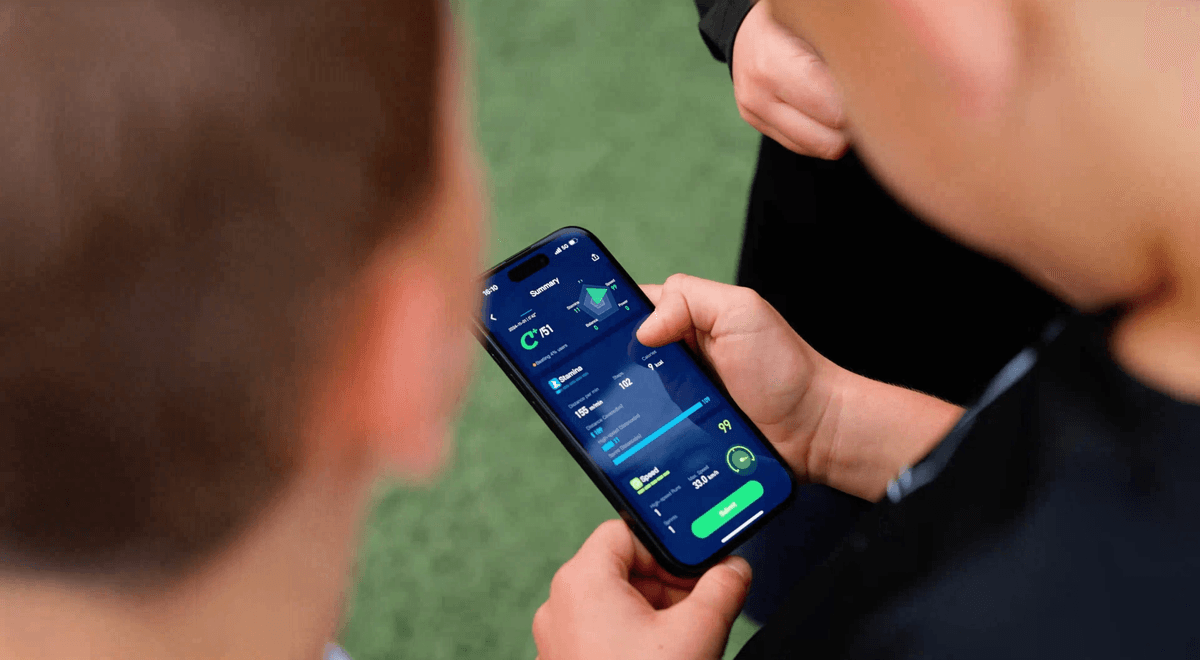
No more "invisible players." Every sprint, turn, and ball touch is recognized, giving every young athlete a voice and a reason to stay in the game.
3. Preventing Physical and Mental Burnout
The Pain Point: The "Too Much, Too Soon" Syndrome
Over-training and the pressure to specialize early are leading causes of both physical injury and mental exhaustion. Without objective monitoring, young bodies are often pushed beyond their physiological limits, leading to chronic injuries that end careers prematurely.
The Solution: Professional-grade Load Management
Technology now allows us to treat youth players with the biological respect they deserve. Wearable tech monitors workload and movement intensity. This data allows parents and coaches to see when a child is entering a "red zone" of fatigue. Shifting the coaching narrative from "toughness" to "biological readiness" ensures that kids stay healthy, recovered, and mentally fresh for the long-term journey.

Visualized performance metrics help coaches and parents ensure healthy development, allowing young athletes to push their limits safely and sustainably.
4. Correcting the "Car Ride Home" Narrative
The Pain Point: High-Pressure Communication
The "Car Ride Home" is often cited by kids as the worst part of youth sports. Subjective, high-pressure feedback from parents is a primary driver of sports-related anxiety. When feedback is based on "feeling" rather than "fact," it often damages the parent-child relationship and the child's love for the game.
The Solution: An Objective Common Language
Digital reports turn subjective arguments into objective conversations. Instead of a parent asking, "Why didn't you run more?", data provides a shared dashboard. The conversation shifts to: "Your ball control frequency has improved by 10% this week." This fosters self-efficacy (the belief in one’s own ability), which is the single strongest psychological predictor of whether a child will stay in a sport long-term.

Changing the conversation: A video recording feature with data overlays turns a standard practice session into a shared celebration of progress, making the car ride home about growth, not just pressure.
Conclusion: Digitalization as the Guardian of the Beautiful Game
The dropout crisis in youth football is a threat to the global football culture. When 70% of children walk away from the pitch before their prime, the sport loses its future leaders, fans, and innovators.
Technology should never replace the soul of football. However, it can serve as its guardian. By introducing objective data into grassroots environments, we aren't just measuring performance—we are validating effort. We are shifting the focus from the elite few to the "hopeful many," ensuring that every child, regardless of their position or skill level, feels the tangible joy of progress.
The future of the sport depends on our ability to speak the language of the digital generation. Through gamification and science-backed load management, we can bridge the gap between the screen and the grass. The ultimate goal isn't just to find the next world-class pro, but to ensure that every child who ties their laces for the first time has the motivation, the confidence, and the sheer fun to keep playing—season after season.